 COA
COA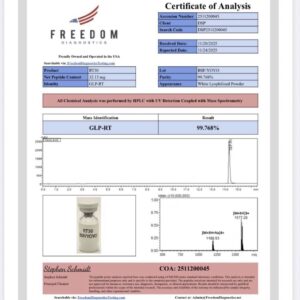
FOR RESEARCH SCIENTIFIC STUDIES ONLY- NOT FOR HUMAN/ANIMAL CONSUMPTION/USE
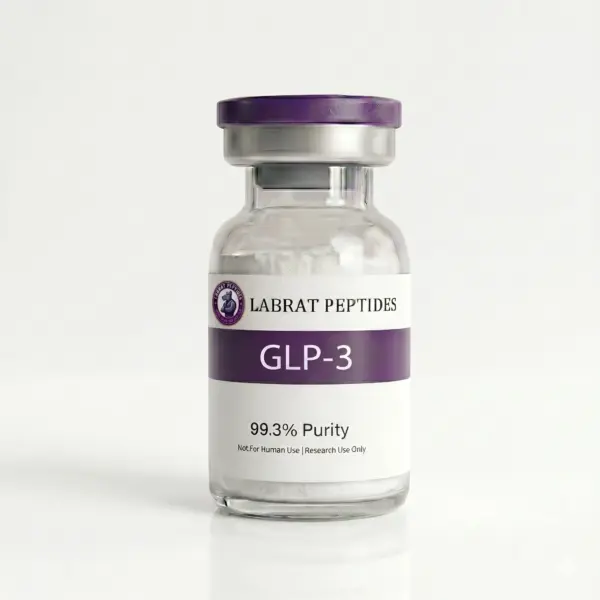
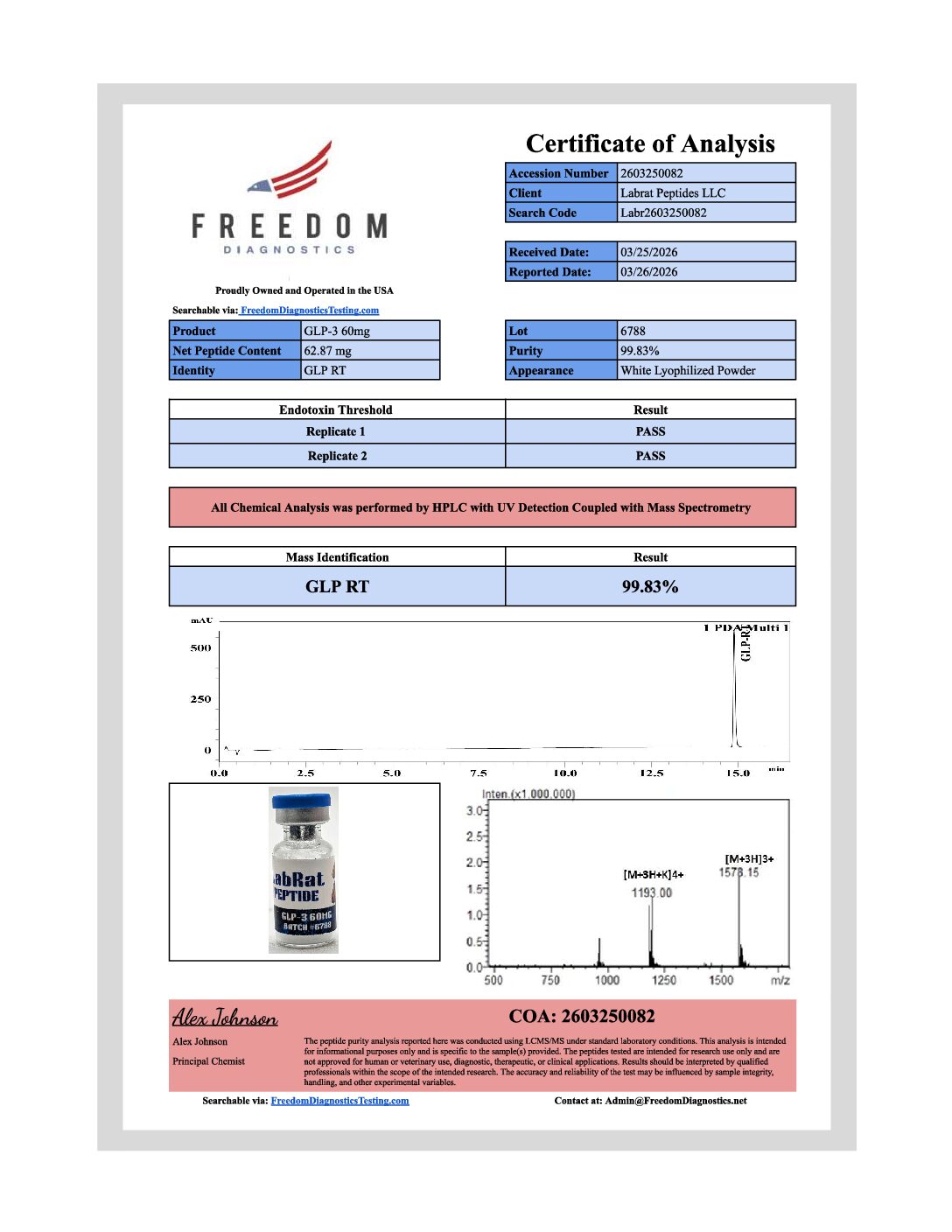
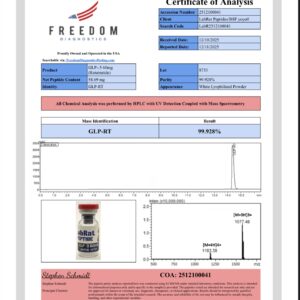
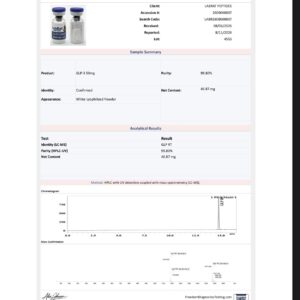
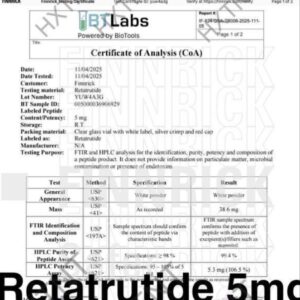
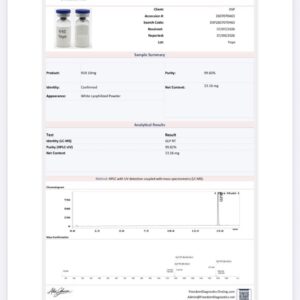
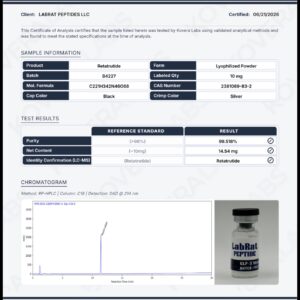
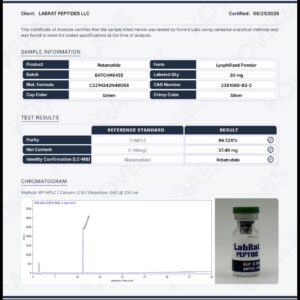
Every batch of Labrat Peptides undergoes third-party Mass Spectrometry and HPLC analysis. We believe in absolute transparency - since in third-party marketing we need complete confidence.
GLP-3 RTA is a synthetic peptide research material used in laboratory investigations involving multi-receptor pharmacology, GLP-1 receptor signaling, GIP receptor signaling, glucagon receptor pathways, cAMP activity, peptide biology, and metabolic-pathway research.
The term GLP-3 RTA is commonly used within the research market to describe a peptide designed to interact with three class B G-protein-coupled receptors: the GLP-1 receptor (GLP-1R), glucose-dependent insulinotropic polypeptide receptor (GIPR), and glucagon receptor (GCGR). This three-receptor profile is the basis for studying multi-agonist pharmacology in experimental systems. vervewell.co
For scientific accuracy, it is important to note that GLP-3 is not a naturally occurring third GLP hormone. The name is an informal research-market term associated with triple-receptor agonism. Peptide Dossier
Research involving this class of compound can help investigators examine how simultaneous activation of multiple class B GPCR pathways affects intracellular signaling compared with single- or dual-receptor reference compounds.
FOR RESEARCH USE ONLY. NOT FOR HUMAN OR VETERINARY USE.
GLP-3 RTA refers to a synthetic peptide research material associated with triple-receptor agonist pharmacology.
The three principal receptor targets studied in this context are:
These receptors belong to the class B family of G-protein-coupled receptors.
Studying multiple receptor pathways simultaneously allows researchers to compare signaling characteristics across different receptor systems.
Experimental research can investigate:
These studies are generally performed using controlled biochemical, cellular, and preclinical research models.
A triple agonist is designed to interact with three receptor systems rather than a single target.
This creates an interesting model for comparative pharmacology.
Researchers can compare:
Single agonist → One receptor pathway
Dual agonist → Two receptor pathways
Triple agonist → Three receptor pathways
This type of experimental design can help investigators understand whether simultaneous receptor engagement produces different intracellular signaling patterns.
The comparison is particularly useful in receptor pharmacology and molecular biology research.
The GLP-1 receptor is a class B GPCR that has been extensively studied in molecular and cellular research.
Research involving GLP-1R can investigate:
Researchers may use recombinant receptor systems or appropriate cell-based assays to investigate receptor activity.
A triple-receptor research compound provides an experimental tool for comparing GLP-1R signaling alongside other receptor pathways.
The glucose-dependent insulinotropic polypeptide receptor is another class B GPCR involved in incretin signaling.
Laboratory research can investigate:
Comparative experiments can examine differences between GLP-1R and GIPR signaling.
This can be particularly useful when studying multi-receptor pharmacology.
The glucagon receptor is also a class B GPCR and plays an important role in cellular signaling.
Researchers can investigate:
Including the glucagon receptor in a multi-receptor research model provides an opportunity to study interactions among three related signaling systems.
G-protein-coupled receptors are among the largest families of membrane receptors.
Class B GPCR research commonly examines:
Multi-receptor peptide research can provide a useful model for studying how different GPCR pathways respond to a single experimental ligand.
Cyclic AMP, or cAMP, is an important intracellular second messenger.
Activation of many class B GPCRs can influence cAMP production through G-protein-mediated signaling.
Researchers can measure cAMP using:
cAMP measurements can provide quantitative information about receptor activation.
This makes cAMP signaling an important endpoint in triple-agonist research.
Receptor pharmacology examines how molecules interact with receptors and alter downstream signaling.
Researchers may measure:
How much experimental material is required to produce a defined response in a specific assay.
The magnitude of the response produced under defined experimental conditions.
The relative activity across different receptor systems.
The interaction between a ligand and receptor.
Changes in downstream intracellular pathways.
These measurements should always be interpreted within the specific experimental system used.
One of the useful applications of multi-receptor research is comparison with single- and dual-target compounds.
Researchers can construct comparative experiments involving:
The purpose of these experiments is to characterize receptor signaling rather than to establish clinical outcomes.
Multi-receptor signaling is relevant to a broad range of metabolic research.
Laboratory studies can investigate:
Experimental models may use isolated cells, receptor-expression systems, tissue models, or other validated research platforms.
Peptide pharmacology involves studying the biological and molecular characteristics of peptide-based compounds.
Researchers can investigate:
Multi-receptor peptides are particularly interesting because one molecule can be evaluated against multiple receptor systems.
Structure-activity relationship research examines how changes in molecular structure influence biological activity.
Researchers may investigate:
These studies can help researchers understand the relationship between peptide structure and receptor behavior.
Peptide stability can be affected by:
Analytical research can investigate changes in peptide composition over time.
Common approaches include HPLC and mass spectrometry.
Some long-acting peptide designs incorporate lipid modifications.
Lipidation research can examine how molecular modifications affect:
These investigations are useful for understanding how structural modifications influence peptide behavior.
Receptor-binding experiments can provide information about molecular interactions.
Potential approaches include:
Researchers can compare binding characteristics across GLP-1R, GIPR, and GCGR systems.
GPCRs can undergo internalization following receptor activation.
Research may investigate:
Fluorescence microscopy and receptor-labeling approaches can provide useful information about these processes.
Following receptor activation, multiple intracellular pathways can be affected.
Researchers may examine:
The specific pathway activated can depend on receptor type, cell model, ligand concentration, and experimental conditions.
Researchers can use molecular biology methods to evaluate downstream transcriptional changes.
Potential techniques include:
Potential research targets may include genes involved in:
Protein-level analysis can complement gene-expression studies.
Researchers may examine:
Common methods include:
Research involving triple-receptor agonist peptides may use different experimental systems.
Potential models include:
The model should be selected according to the specific scientific question.
Analytical characterization is particularly important when working with research peptides.
Laboratories may use:
To evaluate chromatographic purity and sample composition.
To investigate molecular mass and identity.
To combine chromatographic separation with mass-based identification.
To investigate molecular characteristics and potential degradation.
Your current LabRat Peptides product listing states that its batches undergo third-party HPLC and mass-spectrometry analysis and identifies a reported purity of 99.2%. LABRAT PEPTIDES
For your actual product page, however, I recommend displaying the specific batch COA result rather than making a universal purity claim if different batches may vary.
High-performance liquid chromatography is widely used for peptide characterization.
Researchers can use HPLC to evaluate:
HPLC should be interpreted alongside the specific analytical method and reference standard.
Mass spectrometry can complement HPLC by providing molecular-mass information.
Potential applications include:
Combining chromatographic and mass-based techniques provides a stronger analytical profile than relying on a single measurement.
A Certificate of Analysis (COA) provides batch-specific analytical information.
Depending on the laboratory and testing protocol, a COA may include:
For example, third-party COAs for materials marketed under GLP-3/retatrutide-related names can use HPLC and mass spectrometry to characterize the tested sample. Peptira
For your website, link the actual COA for the customer's batch whenever possible.
Research peptides should be stored according to the manufacturer's current product-specific documentation and applicable laboratory procedures.
Important considerations can include:
Laboratory personnel should consult the product documentation and applicable SDS before handling research material.
Research materials should be handled by appropriately trained laboratory personnel.
Standard laboratory practices can include:
All research activities should follow applicable institutional and regulatory requirements.
GLP-3 RTA is a research-market term used for a synthetic peptide associated with triple-receptor agonist research involving GLP-1, GIP, and glucagon receptor pathways.
No. There is no naturally occurring hormone or receptor formally known as GLP-3. The term is informal shorthand used in connection with triple-receptor agonist research. Peptide Dossier
Research focuses on the GLP-1 receptor, GIP receptor, and glucagon receptor.
It involves investigating a molecule capable of interacting with three receptor systems and comparing its signaling profile with single- and dual-receptor compounds.
cAMP is an intracellular second messenger commonly used as a measurable endpoint when studying class B GPCR signaling.
HPLC and mass spectrometry are commonly used analytical techniques for peptide characterization.
No. It is presented strictly for laboratory research and is not intended for human or veterinary use.
These are good outbound links for the product page because they point users toward scientific databases rather than competitor product pages:
These links also help address Rank Math's “No outbound links were found” warning.
I recommend using 4–6 internal links naturally rather than linking every occurrence of the focus keyword.
Researchers investigating related metabolic signaling compounds can explore the broader Research Peptides collection for additional laboratory research materials.
Another:
Additional educational resources covering peptide biology, analytical testing, receptor pharmacology, and laboratory methods are available through the LabRat Peptides Research Hub.
For this product, I recommend:
Primary Category:
Metabolic Peptides
Secondary Categories:
Recommended Tags:
GLP-3 RTA, GLP-3 Research, GLP-3 Peptide, Triple Agonist, Triple Receptor Agonist, GLP-1 Receptor, GIP Receptor, Glucagon Receptor, GPCR Research, cAMP Signaling, Metabolic Research, Peptide Research, Research Compounds, Laboratory Research
You can use this short section near the top of the WooCommerce description:
Your current LabRat Peptides listing reports 99.2% purity and third-party HPLC/mass-spectrometry testing. If that specification applies to the exact batch being sold, you can include it in this section; otherwise, use the batch-specific COA value. LABRAT PEPTIDES
FOR RESEARCH USE ONLY. NOT FOR HUMAN OR VETERINARY USE.
This product is presented as research material for controlled laboratory investigation. The information on this page is intended for scientific and educational purposes and does not constitute medical advice, treatment recommendations, dosing instructions, or instructions for human or veterinary administration.
The term GLP-3 is an informal research-market designation and should not be interpreted as the name of a naturally occurring hormone or receptor. Research-market products using this terminology should be identified according to their specific product documentation, analytical characterization, and batch information. Peptide Dossier
Experimental results can vary according to the research model, peptide preparation, analytical method, concentration, exposure conditions, and laboratory protocol. Preclinical or in-vitro findings should not automatically be generalized to humans.
Researchers are responsible for following applicable laws, institutional requirements, laboratory safety procedures, product documentation, and approved research protocols.
| Sequence | Available on COA |
| Appearance | White Lyophilized Powder |
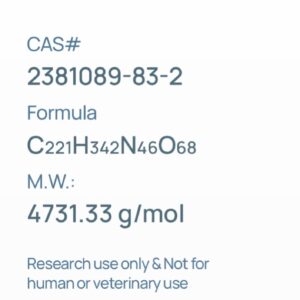
| Mol. Weight | 1419.6 g/mol |
| Purity | 99.2% |
| Storage | -20°C or below |
| SKU | 9954233811230-big-gs |

All peptides and research chemicals sold on this site are intended exclusively for in-vitro laboratory research. They are not approved for human consumption, medical treatment, veterinary use, or any in-vivo application.