

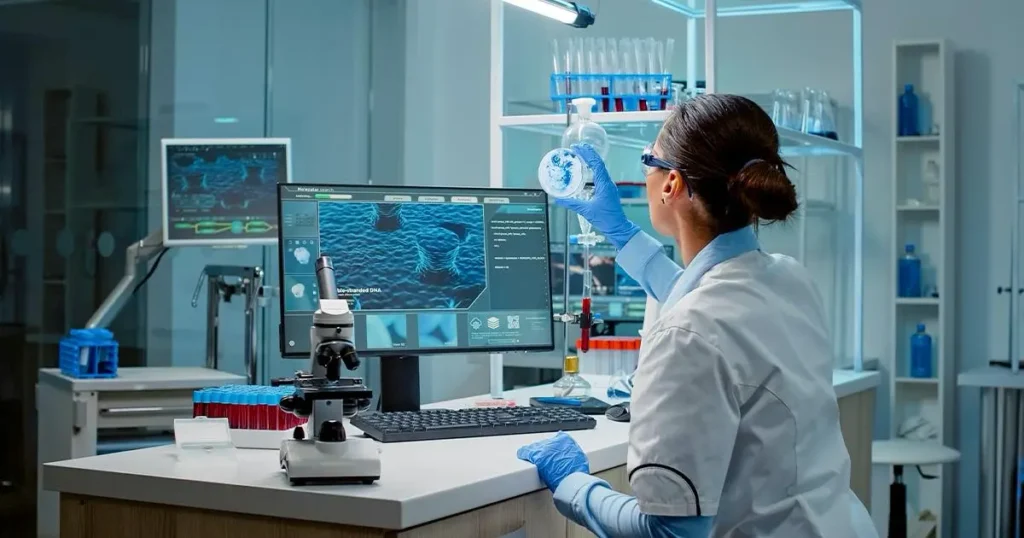
Scientific research has evolved dramatically over the past few decades, driven by rapid advancements in biotechnology. By combining biology with innovative technologies, biotechnology has transformed how researchers study living systems, analyze biological materials, and develop new laboratory techniques. Today, biotechnology supports research across numerous scientific disciplines, enabling greater precision, efficiency, and collaboration.
This article explores how biotechnology is advancing scientific research, the technologies shaping modern laboratories, and the innovations expected to influence the future of science.
What Is Biotechnology?
Biotechnology is the application of biological systems, living organisms, or biological processes to develop technologies that support research, manufacturing, environmental science, agriculture, and other scientific fields.
Modern biotechnology integrates expertise from multiple disciplines, including:
- Molecular Biology
- Genetics
- Biochemistry
- Microbiology
- Bioinformatics
- Chemical Engineering
- Data Science
- Laboratory Automation
Together, these fields help researchers better understand biological systems and improve scientific methodologies.
The Evolution of Scientific Research
Research methods have advanced significantly from manual experimentation to highly automated laboratory systems capable of processing thousands of samples efficiently.
Key milestones include:
- DNA sequencing technologies
- Polymerase Chain Reaction (PCR)
- High-throughput screening
- Advanced microscopy
- Laboratory automation
- Artificial intelligence-assisted data analysis
These innovations have expanded research capabilities while improving accuracy and reproducibility.
Modern Laboratory Technologies
Today’s biotechnology laboratories rely on sophisticated instruments that enable detailed analysis of biological samples.
Common technologies include:
High-Performance Liquid Chromatography (HPLC)
Used to separate and analyze complex mixtures for research and quality assessment.
Mass Spectrometry (MS)
Provides detailed information about molecular composition and supports analytical research across multiple disciplines.
DNA Sequencing
Allows researchers to study genetic information with increasing speed and precision.
Flow Cytometry
Used for analyzing characteristics of individual cells in research settings.
Advanced Microscopy
Modern imaging technologies allow researchers to observe biological structures at exceptionally high resolution.
Laboratory Automation
Automation has become a major driver of scientific progress.
Automated laboratory systems help researchers:
- Process larger numbers of samples
- Improve consistency
- Reduce manual errors
- Increase laboratory efficiency
- Standardize research procedures
Examples include robotic liquid handling systems, automated sample preparation, and digital laboratory workflows.
Artificial Intelligence in Biotechnology
Artificial intelligence (AI) is becoming an increasingly valuable tool in scientific research.
Researchers use AI to:
- Analyze complex biological datasets
- Identify research patterns
- Support image analysis
- Optimize laboratory workflows
- Improve predictive modeling
AI complements traditional research methods by accelerating data interpretation while allowing scientists to focus on experimental design and scientific questions.
Biotechnology and Data Science
Modern research generates vast amounts of data that require advanced computational tools for analysis.
Data science supports biotechnology through:
- Statistical analysis
- Bioinformatics
- Machine learning
- Data visualization
- Cloud computing
- Research collaboration platforms
These technologies enable researchers to manage and interpret increasingly complex datasets.
Improving Research Accuracy
Biotechnology has significantly enhanced the precision of scientific investigations.
Contributing factors include:
- Automated analytical instruments
- Standardized laboratory procedures
- Digital record keeping
- Advanced quality control systems
- Continuous equipment calibration
These improvements help laboratories produce more consistent and reproducible results.
Collaboration Across Scientific Disciplines
Scientific innovation increasingly depends on collaboration between multiple areas of expertise.
Biotechnology often brings together:
- Biologists
- Chemists
- Engineers
- Computer scientists
- Data analysts
- Laboratory technicians
- Regulatory specialists
Interdisciplinary collaboration encourages the development of innovative research methods and technologies.
Quality Assurance in Modern Laboratories
Reliable research depends on strong quality management systems.
Many laboratories implement practices such as:
- Good Laboratory Practices (GLP)
- Equipment calibration
- Environmental monitoring
- Documentation standards
- Batch traceability
- Routine quality testing
Quality assurance helps maintain confidence in scientific findings and supports reproducibility.
Emerging Areas of Biotechnology Research
Biotechnology continues to evolve rapidly, creating new opportunities for scientific discovery.
Current areas of innovation include:
- Synthetic biology
- Precision laboratory automation
- Gene editing research
- Bioinformatics
- Biomaterials research
- Advanced molecular imaging
- Sustainable laboratory technologies
These developments are expanding the possibilities for future research across many scientific disciplines.
Challenges and Opportunities
While biotechnology has transformed scientific research, laboratories continue to face important challenges.
These include:
- Managing increasingly large datasets
- Maintaining regulatory compliance
- Integrating new technologies
- Supporting interdisciplinary collaboration
- Training researchers on advanced equipment
- Ensuring long-term data integrity
Addressing these challenges will help laboratories continue advancing scientific knowledge.
The Future of Biotechnology in Research
Future biotechnology innovations are expected to make research faster, more accurate, and increasingly data-driven.
Researchers anticipate continued growth in:
- AI-assisted laboratory systems
- Robotic automation
- Digital laboratory management
- Advanced molecular analysis
- Sustainable research technologies
- Personalized laboratory workflows
As technology continues to evolve, biotechnology will remain at the forefront of scientific discovery.
Conclusion
Biotechnology has become an essential foundation of modern scientific research. Through advances in laboratory automation, molecular biology, analytical instrumentation, artificial intelligence, and data science, researchers can investigate biological systems with unprecedented precision and efficiency.
As new technologies continue to emerge, biotechnology will play an increasingly important role in expanding scientific knowledge, improving laboratory practices, and driving innovation across numerous fields of research.
Frequently Asked Questions
What is the role of biotechnology in scientific research?
Biotechnology provides the tools, technologies, and methodologies that enable researchers to study biological systems, analyze complex data, and improve laboratory processes.
How does biotechnology improve research accuracy?
Advanced analytical instruments, automation, standardized procedures, and quality assurance systems help laboratories produce more reliable and reproducible results.
What technologies are commonly used in biotechnology laboratories?
Common technologies include HPLC, mass spectrometry, PCR, DNA sequencing, flow cytometry, advanced microscopy, robotic automation, and laboratory information management systems.
Why is biotechnology important for future scientific innovation?
Biotechnology supports continuous advancements in laboratory methods, analytical technologies, automation, and data analysis, helping researchers explore increasingly complex scientific questions.