

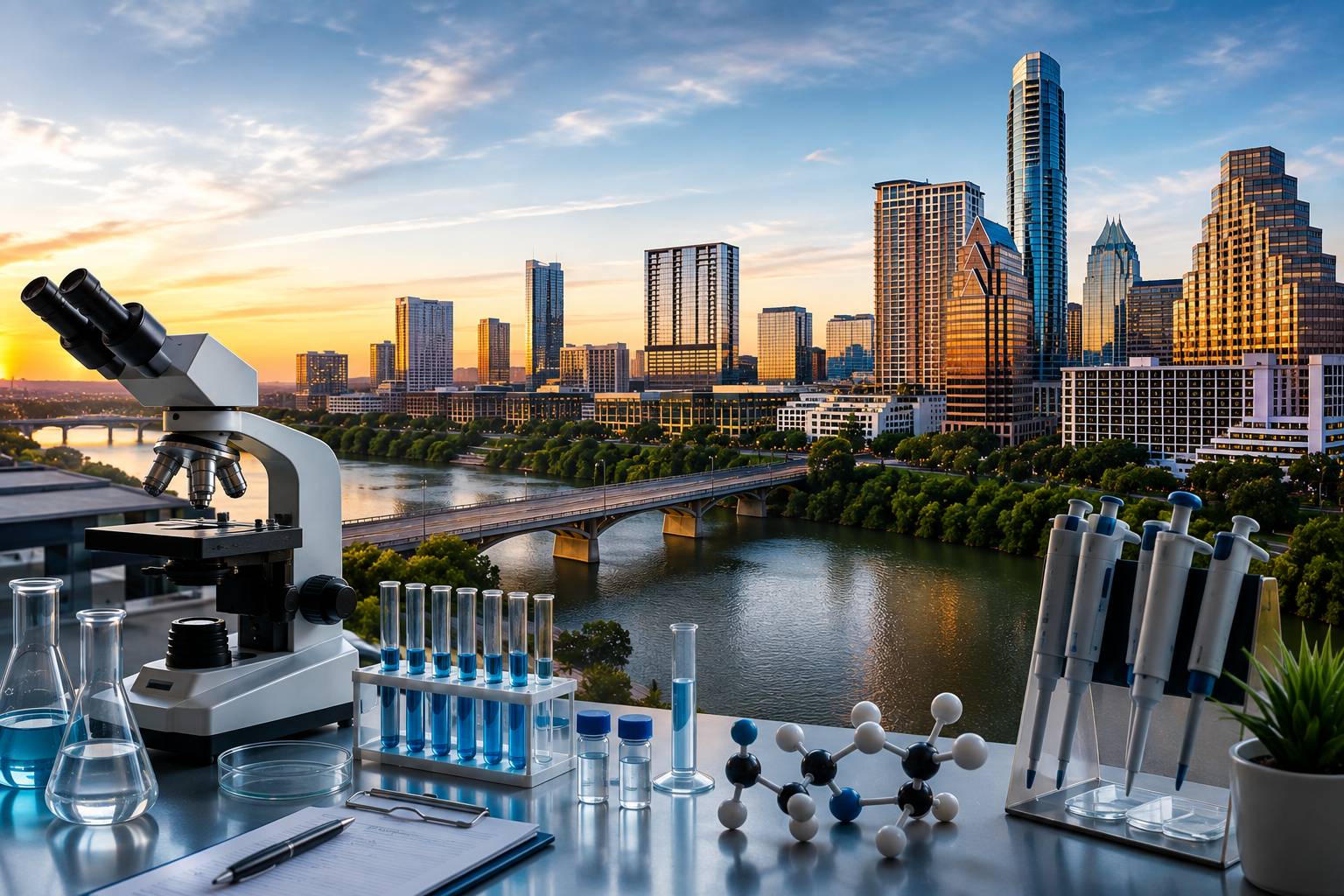
Austin Life Science Ecosystem: A Guide to Biotechnology Research in Austin
Biotechnology research in Austin is becoming an increasingly important part of Texas's growing life science and technology ecosystem. Known for its technology sector, entrepreneurial culture, universities, and expanding medical infrastructure, Austin is attracting researchers, biotechnology companies, startups, academic institutions, and organizations working across the life sciences.
The combination of major research institutions, advanced technology, engineering expertise, biomedical innovation, and scientific entrepreneurship is creating new opportunities for biotechnology research in Austin and throughout Central Texas.
Texas as a whole has developed a substantial biotechnology and life sciences sector, supported by research institutions, biotechnology companies, skilled workers, and advanced laboratory infrastructure. Austin contributes its own strengths in software, artificial intelligence, engineering, medicine, and academic research.
This article explores biotechnology research in Austin, the institutions contributing to scientific discovery, emerging areas of life science research, laboratory infrastructure, and the factors helping Austin develop into an increasingly important biotechnology location.
Why Austin Is Becoming a Biotechnology Research Hub
Biotechnology research in Austin benefits from the intersection of technology, engineering, medicine, data science, and biological research.
Austin has traditionally been recognized as a major technology and innovation center. As biotechnology becomes increasingly dependent on computational tools and advanced analytical technologies, the city's established technology ecosystem provides an important foundation for life science development.
Modern biotechnology increasingly incorporates technologies such as:
- Artificial intelligence
- Machine learning
- Data science
- Bioinformatics
- Laboratory automation
- Molecular biology
- Biomedical engineering
- Advanced imaging
- Computational biology
These technologies allow researchers to combine biological experimentation with sophisticated computational analysis.
The result is a multidisciplinary environment in which biotechnology research in Austin can benefit from expertise traditionally associated with both technology companies and scientific institutions.
The Role of UT Austin in Life Science Research
The University of Texas at Austin is one of the most important contributors to the region's scientific ecosystem.
UT Austin supports research across molecular biosciences, biomedical engineering, pharmacy, public health, engineering, computer science, and other scientific disciplines.
The university has highlighted multidisciplinary research involving medicine, engineering, life sciences, and computing, including work addressing emerging diseases, drug development, and biosecurity.
For organizations interested in biotechnology research in Austin, this multidisciplinary environment is significant because modern life science research increasingly depends on collaboration between different scientific and technical fields.
Useful resource:
UT Austin Research
Researchers and organizations can also explore the broader LabRat Peptides research collection when looking for laboratory research materials relevant to peptide and biochemical studies. LABRAT PEPTIDES
Dell Medical School and Biomedical Research
Another important component of biotechnology research in Austin is Dell Medical School at UT Austin.
Dell Medical School focuses on medical research, healthcare innovation, technology, and multidisciplinary approaches to improving health.
Its research and innovation programs bring together medicine, technology, data science, and entrepreneurship. This combination is particularly relevant as modern biomedical research increasingly depends on computational analysis and large-scale datasets.
Biomedical data science is another growing area of interest. Researchers can use sophisticated computational approaches to analyze clinical and biological information, identify patterns, and support scientific investigation.
This convergence of biomedical research, data science, artificial intelligence, and healthcare innovation strengthens the broader Austin life science ecosystem.
External resource:
Dell Medical School
Texas Biologics and Biotechnology Innovation
Texas Biologics is another example of the expanding scientific infrastructure associated with biotechnology research in Austin.
The initiative brings together researchers from engineering, natural sciences, medicine, and other disciplines to support biologics discovery and development.
Research activities can involve areas such as:
- Proteins
- Antibodies
- Peptides
- Vaccines
- Enzymes
- Molecular biology
- Translational research
This type of interdisciplinary work demonstrates how Austin biotech research increasingly connects laboratory discoveries with technology development and potential commercialization.
Learn more:
Texas Biologics at UT Austin
Key Areas of Biotechnology Research in Austin
The Austin biotechnology research ecosystem covers a broad range of scientific disciplines.
Molecular Biology Research
Molecular biology is fundamental to modern biotechnology.
Researchers investigate DNA, RNA, proteins, cellular pathways, and molecular interactions to better understand biological systems.
Research can involve:
- DNA analysis
- RNA research
- Protein characterization
- Gene expression studies
- Cellular signaling
- Molecular diagnostics
These areas provide the scientific foundation for many biotechnology applications.
Biomedical Research
Austin's expanding academic medical ecosystem is supporting additional biomedical research opportunities.
Researchers may work across:
- Disease biology
- Drug discovery
- Diagnostics
- Medical devices
- Biomedical engineering
- Computational medicine
- Health data science
The continued development of academic medical infrastructure in Austin is expected to strengthen connections between clinical research, laboratory science, engineering, and technology.
This makes biomedical science an important component of biotechnology research in Austin.
Biotechnology and Artificial Intelligence
Artificial intelligence is becoming increasingly relevant to biotechnology.
AI and machine learning can assist researchers with:
- Biological data analysis
- Image analysis
- Pattern recognition
- Computational modeling
- Drug discovery research
- Laboratory workflow optimization
Austin's existing technology ecosystem provides access to expertise in software engineering, artificial intelligence, cloud computing, and advanced data analysis.
This creates an important connection between Austin biotechnology research and emerging AI technologies.
Biotechnology Laboratories and Research Infrastructure
Modern biotechnology laboratories require sophisticated infrastructure to conduct reliable scientific research.
Depending on the research area, laboratories may use:
- High-performance liquid chromatography
- Mass spectrometry
- PCR systems
- DNA sequencing
- Flow cytometry
- Microscopy
- Cell culture systems
- Automated liquid handling
- Laboratory information management systems
- Advanced analytical instruments
These technologies allow researchers to characterize biological materials, analyze samples, and generate experimental data.
For laboratories working with peptides, proteins, enzymes, or other research compounds, analytical methods such as HPLC and mass spectrometry can play an important role in material characterization.
For researchers interested in how freeze-dried laboratory materials are produced and handled, LabRat Peptides also provides an educational resource covering lyophilized research materials. LABRAT PEPTIDES
Austin's Technology and Biotechnology Connection
One of Austin's major advantages is its established technology ecosystem.
The city's technology community provides expertise in:
- Software engineering
- Artificial intelligence
- Data science
- Cloud computing
- Robotics
- Semiconductor technology
- Digital health
- Computational modeling
These capabilities increasingly overlap with life science research in Austin.
For example, biotechnology researchers can combine biological experimentation with computational models, AI-assisted analysis, automated laboratory systems, and large-scale datasets.
This convergence is helping create a new generation of technology-driven biotechnology research in Austin.
Academic and Industry Collaboration
Collaboration is an important component of Austin biotech research.
Successful biotechnology development often requires cooperation between:
- Universities
- Research laboratories
- Biotechnology companies
- Medical institutions
- Engineers
- Data scientists
- Entrepreneurs
- Investors
- Technology companies
Academic-industry collaboration can help researchers move scientific discoveries from laboratory environments toward further development and commercialization.
This type of collaboration is particularly valuable in biotechnology because successful projects often require expertise spanning biology, chemistry, engineering, medicine, computing, and business.
Research Materials and Laboratory Supply
As biotechnology research in Austin expands, laboratories require dependable access to appropriate research materials and analytical resources.
Researchers may work with:
- Research peptides
- Proteins
- Amino acids
- Enzymes
- Research compounds
- Laboratory reagents
- Analytical standards
- Biological materials
For research laboratories, appropriate documentation, storage conditions, labeling, and quality-control procedures are important components of laboratory operations.
LabRat Peptides supplies research peptides and laboratory research compounds intended exclusively for scientific and laboratory research. The company's catalog includes research peptides, GLP research materials, amino acids, biochemicals, research compounds, and other laboratory materials. LABRAT PEPTIDES
Researchers should always select materials according to their experimental requirements and follow applicable laboratory procedures and manufacturer documentation.
Quality and Analytical Testing in Biotechnology Research
Quality characterization is another important consideration for modern laboratory research.
Researchers may evaluate materials using analytical techniques such as:
- HPLC
- LC-MS
- Mass spectrometry
- Chromatography
- Molecular characterization
- Purity analysis
LabRat Peptides describes third-party HPLC and LC-MS testing for its research materials, along with batch-level documentation where applicable. LABRAT PEPTIDES
Researchers interested in laboratory quality practices can also explore LabRat Peptides' Scientific Excellence and research resources, which discuss analytical technologies including HPLC and mass spectrometry. LABRAT PEPTIDES
Texas Biotechnology and the Broader Life Science Ecosystem
The growth of biotechnology research in Austin is part of a much larger Texas life science ecosystem.
Texas has invested significantly in biotechnology, biomedical research, medical innovation, and research infrastructure.
Austin benefits from this statewide environment while adding its own strengths in:
- Technology
- Entrepreneurship
- Engineering
- Artificial intelligence
- Academic research
- Biomedical innovation
The combination creates opportunities for researchers and biotechnology organizations operating across multiple scientific disciplines.
The Future of Biotechnology Research in Austin
The future of biotechnology research in Austin is likely to be increasingly connected to artificial intelligence, automation, computational biology, advanced analytics, and multidisciplinary collaboration.
Important areas to watch include:
- AI-assisted biotechnology research
- Computational biology
- Biomedical data science
- Advanced molecular analysis
- Laboratory robotics
- Digital health
- Synthetic biology
- Biologic research
- Precision medicine
- Advanced diagnostics
- Biotechnology commercialization
As research institutions, medical programs, technology companies, and biotechnology organizations continue to collaborate, Austin's life science ecosystem has the potential to become increasingly sophisticated.
Why Austin Matters for Biotechnology
Biotechnology research in Austin is being shaped by more than traditional laboratory science.
The city's combination of:
Academic research + medicine + engineering + artificial intelligence + technology + entrepreneurship
creates an environment where researchers can approach complex biological problems from multiple perspectives.
This multidisciplinary model is becoming increasingly important as biotechnology becomes more data-driven and technologically sophisticated.
Austin's existing technology expertise gives life science organizations access to capabilities that can complement traditional biological and biomedical research.
Conclusion
Biotechnology research in Austin is developing alongside the city's established technology and innovation ecosystem.
Institutions such as UT Austin, Dell Medical School, and Texas Biologics contribute to research across molecular biology, biomedical science, biologics, data science, and biotechnology innovation.
At the same time, Austin's technology community provides expertise in artificial intelligence, software, engineering, and computational science that can complement traditional laboratory research.
As these disciplines continue to converge, biotechnology research in Austin is positioned to remain an important part of the broader Texas life science ecosystem.
For researchers, biotechnology organizations, laboratories, and scientific companies, Austin provides an increasingly interesting environment for collaboration, innovation, and scientific discovery.
Frequently Asked Questions
What makes Austin a biotechnology research hub?
Austin combines major academic research institutions, biomedical programs, technology companies, engineering expertise, and an entrepreneurial ecosystem. These factors support collaboration across biotechnology, medicine, computing, and life sciences.
Where is biotechnology research conducted in Austin?
Research is conducted across universities, medical research programs, biotechnology organizations, private laboratories, startups, and other scientific institutions throughout the Austin region.
What biotechnology research areas are growing in Austin?
Important areas include biomedical research, molecular biology, biologics, artificial intelligence, biomedical data science, computational biology, medical technology, and laboratory automation.
Is UT Austin involved in biotechnology research?
Yes. UT Austin supports research across molecular biosciences, biomedical engineering, pharmacy, medicine, computing, and other disciplines relevant to biotechnology and life sciences.
How is AI influencing biotechnology research?
AI can help researchers analyze biological datasets, identify patterns, perform computational modeling, process images, and improve laboratory workflows. Austin's strong technology sector provides an additional foundation for combining AI with life science research.