

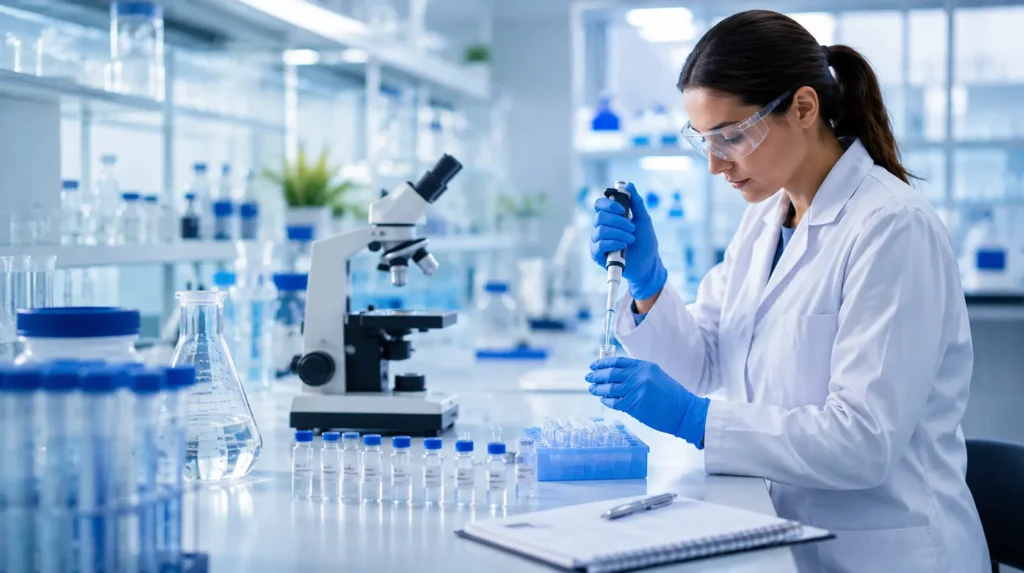
Laboratory Safety Fundamentals: Best Practices for Safe Scientific Research
Laboratory safety fundamentals are essential for maintaining a secure, organized, and productive research environment. Whether research takes place in an academic institution, biotechnology facility, industrial laboratory, or private research organization, appropriate laboratory safety practices help protect personnel, equipment, samples, and research data.
A well-designed safety program combines appropriate personal protective equipment, proper sample handling, equipment procedures, contamination control, emergency preparedness, and ongoing training.
The Occupational Safety and Health Administration (OSHA) provides extensive guidance on laboratory hazards and workplace safety practices, making it a useful resource for laboratories developing or reviewing their safety procedures.
This guide explains the fundamental principles of research laboratory safety and practical measures that can help researchers maintain a safer and more organized working environment.
Why Laboratory Safety Matters
Laboratories may contain chemicals, biological materials, research samples, specialized equipment, compressed gases, electrical systems, and other potential hazards.
Effective laboratory safety procedures help researchers identify and manage these risks before they result in accidents, contamination, equipment damage, or compromised research.
Important benefits include:
- Reducing the risk of workplace accidents
- Protecting laboratory personnel
- Preserving sample integrity
- Reducing contamination
- Protecting laboratory equipment
- Supporting regulatory requirements
- Improving research consistency
- Promoting responsible scientific practices
Safety should be treated as an ongoing part of laboratory operations rather than a one-time checklist.
The National Institutes of Health (NIH) provides extensive resources covering biomedical research, laboratory science, and responsible research practices.
Understanding Laboratory Hazards
Before establishing laboratory safety guidelines, researchers should understand the types of hazards that may exist in their working environment.
Depending on the facility, potential hazards can include:
- Chemical hazards
- Biological hazards
- Physical hazards
- Electrical hazards
- Fire hazards
- Sharps and glass hazards
- Equipment-related hazards
- Temperature-related hazards
Different laboratories require different safety procedures depending on the materials, equipment, and research activities involved.
A risk assessment should therefore be appropriate to the specific laboratory environment.
Personal Protective Equipment (PPE)
Laboratory personal protective equipment (PPE) provides an important layer of protection when working with potentially hazardous materials or laboratory equipment.
Common PPE may include:
- Laboratory coats
- Appropriate disposable gloves
- Safety glasses
- Protective goggles
- Face shields
- Closed-toe footwear
- Respiratory protection when specifically required
The appropriate PPE depends on the task and potential hazards.
Researchers should inspect PPE before use and replace damaged or contaminated equipment according to laboratory procedures.
The Centers for Disease Control and Prevention (CDC) provides laboratory safety and biosafety information that can help researchers understand appropriate protective practices.
Maintaining a Clean Laboratory Workspace
Good housekeeping is an important component of safe laboratory practices.
A clean and organized workspace can help reduce unnecessary hazards and improve workflow efficiency.
Recommended practices include:
- Keeping work surfaces clean
- Removing unnecessary clutter
- Cleaning equipment according to established procedures
- Disposing of waste appropriately
- Keeping emergency exits accessible
- Maintaining clearly identified storage areas
- Cleaning spills promptly according to laboratory procedures
Researchers should avoid allowing unnecessary materials to accumulate around active work areas.
Good housekeeping also supports contamination prevention and makes it easier to identify potential hazards.
Proper Sample Identification and Labeling
Accurate sample identification is an essential part of laboratory management and research integrity.
Depending on the laboratory's procedures, sample labels may include:
- Sample identification number
- Material name
- Preparation date
- Lot or batch number
- Storage requirements
- Research project reference
- Relevant expiration or review information
Researchers should never rely solely on memory when identifying laboratory materials.
Clear labeling helps reduce the risk of sample mix-ups and supports accurate research documentation.
For laboratories working with specialized research materials, appropriate labeling should also be consistent with the manufacturer's documentation and institutional procedures.
Safe Laboratory Sample Handling
Proper laboratory sample handling helps protect researchers while maintaining sample integrity.
Before beginning a laboratory procedure, researchers should:
- Review the relevant Standard Operating Procedure (SOP).
- Understand the materials involved.
- Identify potential hazards.
- Verify that required equipment is functioning correctly.
- Select appropriate PPE.
- Prepare the workspace.
- Follow established handling procedures.
Researchers should also avoid eating, drinking, or engaging in unrelated personal activities in designated laboratory work areas.
Following consistent procedures can reduce unnecessary risks and support reproducible research workflows.
Laboratory Equipment Safety
Specialized equipment is an important part of modern scientific research, but incorrect operation or poor maintenance can create hazards.
General laboratory equipment safety practices include:
- Read the manufacturer's operating instructions.
- Inspect equipment before use.
- Do not operate visibly damaged equipment.
- Follow established maintenance procedures.
- Maintain calibration records where applicable.
- Keep service records.
- Report equipment problems promptly.
- Avoid unauthorized modifications.
- Disconnect equipment before servicing when appropriate.
Equipment-specific procedures should always take priority over generic recommendations.
For laboratories using analytical equipment, maintaining appropriate calibration and maintenance records is particularly important for both safety and research quality.
Chemical and Material Storage
Proper storage is an important part of laboratory safety procedures.
Research materials should be stored according to their specific requirements rather than using a single storage method for all materials.
General considerations may include:
- Manufacturer storage instructions
- Temperature requirements
- Light sensitivity
- Moisture sensitivity
- Compatibility considerations
- Container integrity
- Appropriate labeling
- Inventory management
Some materials may require refrigeration or frozen storage, while others may be stable under controlled room-temperature conditions.
For additional information about research-material storage, you can link internally to your Research Material Storage content once that article is published.
Preventing Laboratory Contamination
Laboratory contamination prevention is particularly important when working with biological samples, analytical materials, reagents, or other sensitive research compounds.
Common practices include:
- Using clean laboratory equipment
- Changing gloves when appropriate
- Cleaning work surfaces
- Using dedicated equipment when required
- Maintaining appropriate sterile techniques
- Keeping containers closed when not in use
- Avoiding unnecessary exposure of samples
Contamination can compromise experimental results and may lead to wasted materials, repeated experiments, and unreliable data.
Good laboratory organization and consistent handling procedures can therefore contribute to both safety and research quality.
Laboratory Emergency Preparedness
Every research facility should have appropriate laboratory emergency procedures based on its activities and potential hazards.
Personnel should know the location and appropriate use of relevant safety resources, such as:
- Emergency exits
- Fire extinguishers
- Eyewash stations
- Safety showers
- First-aid supplies
- Spill-response equipment
- Emergency communication systems
- Relevant contact information
Researchers should also understand what actions are expected during different types of emergencies.
The National Fire Protection Association (NFPA) provides fire and life-safety resources relevant to laboratory and workplace environments.
Emergency procedures should be communicated clearly and reviewed periodically.
Chemical Safety and Biological Safety
Different laboratory environments require different approaches to hazard control.
Chemical safety may involve:
- Appropriate chemical labeling
- Safety Data Sheet (SDS) access
- Appropriate storage
- Proper PPE
- Spill-response procedures
- Waste-management procedures
Biological safety may involve:
- Appropriate containment practices
- PPE
- Decontamination procedures
- Controlled access
- Proper biological waste management
The appropriate procedures depend on the materials and research activities involved.
The CDC's Biosafety in Microbiological and Biomedical Laboratories (BMBL) is an important reference for laboratories working with biological materials.
Laboratory Waste Management
Appropriate laboratory waste management helps reduce hazards and supports an organized research environment.
Laboratories may generate different categories of waste, including:
- Chemical waste
- Biological waste
- Sharps
- Contaminated materials
- Broken laboratory glass
- General laboratory waste
Waste should be segregated, labeled, stored, and disposed of according to applicable institutional and regulatory procedures.
Researchers should never assume that all laboratory waste can be disposed of through ordinary waste streams.
Documentation and Laboratory Records
Good documentation supports both safety and scientific integrity.
Depending on laboratory requirements, records may include:
- Equipment maintenance logs
- Calibration records
- Training records
- Inventory documentation
- Sample records
- Incident reports
- Environmental monitoring records
- Waste-management documentation
- Safety inspections
Accurate records improve traceability and can help researchers investigate unexpected events.
Documentation is also important for demonstrating that established laboratory safety guidelines and procedures are being followed.
Standard Operating Procedures and Laboratory Safety
Standard Operating Procedures, commonly called SOPs, provide documented instructions for performing laboratory tasks consistently.
An effective SOP may describe:
- Required equipment
- Required PPE
- Materials involved
- Potential hazards
- Step-by-step procedures
- Waste-disposal requirements
- Emergency considerations
- Documentation requirements
Researchers should review the relevant SOP before performing unfamiliar procedures.
SOPs should also be reviewed and updated when laboratory equipment, materials, procedures, or safety requirements change.
Laboratory Safety Training
Ongoing laboratory safety training helps researchers understand current procedures and potential hazards.
Training may cover:
- General laboratory safety
- PPE selection and use
- Chemical safety
- Biological safety
- Equipment operation
- Emergency response
- Waste management
- Sample handling
- Documentation procedures
- Contamination prevention
Training should be appropriate to the researcher's responsibilities and the hazards present in the laboratory.
New personnel should receive appropriate orientation before independently performing laboratory activities.
Building a Culture of Laboratory Safety
Strong laboratory safety practices depend on more than written policies.
A positive safety culture encourages everyone in the research environment to:
- Report hazards
- Follow established procedures
- Ask questions when uncertain
- Participate in safety training
- Maintain organized workspaces
- Document incidents
- Communicate potential risks
- Learn from previous safety events
Researchers and laboratory managers share responsibility for maintaining an environment where safety is treated as an essential part of scientific work.
Laboratory Safety and Research Integrity
Safety and research quality are closely connected.
Poor handling practices can result not only in personnel risks but also in:
- Contaminated samples
- Lost research materials
- Damaged equipment
- Incorrect experimental results
- Repeated experiments
- Incomplete documentation
By integrating laboratory safety procedures into everyday research workflows, laboratories can help protect both personnel and the integrity of scientific investigations.
Best Practices for Laboratory Safety
The following checklist summarizes the most important laboratory safety fundamentals:
Before starting work
- Review the relevant SOP.
- Identify potential hazards.
- Check laboratory equipment.
- Prepare appropriate PPE.
- Confirm that required safety equipment is accessible.
During laboratory work
- Keep the workspace organized.
- Follow established procedures.
- Use appropriate PPE.
- Label samples correctly.
- Minimize contamination risks.
- Handle materials according to their requirements.
After completing work
- Clean the workspace.
- Store materials appropriately.
- Dispose of waste according to procedure.
- Clean or secure equipment.
- Update required records.
- Report incidents or equipment problems.
Frequently Asked Questions
What are laboratory safety fundamentals?
Laboratory safety fundamentals are the basic practices used to protect researchers, equipment, samples, and the research environment. They include PPE, safe sample handling, equipment safety, proper storage, contamination prevention, emergency preparedness, and safety training.
Why is laboratory safety important?
Laboratory safety helps reduce accidents, protect personnel, prevent contamination, preserve research materials, and support reliable scientific research.
What PPE is commonly used in laboratories?
Common PPE includes laboratory coats, gloves, safety glasses, goggles, closed-toe footwear, and additional protective equipment when required by the specific laboratory procedure.
How can laboratories prevent contamination?
Laboratories can reduce contamination risks by maintaining clean workspaces, using appropriate laboratory tools, changing gloves when necessary, following established procedures, and using suitable sterile techniques where required.
What should laboratory personnel do during an emergency?
Personnel should follow the facility's established emergency procedures, use appropriate emergency equipment when trained to do so, and follow instructions from responsible safety personnel and emergency services.
How often should laboratory safety training be completed?
Training frequency depends on the laboratory, applicable regulations, institutional requirements, and the research activities being performed. Personnel should also receive additional training when procedures, equipment, hazards, or responsibilities change.