Description
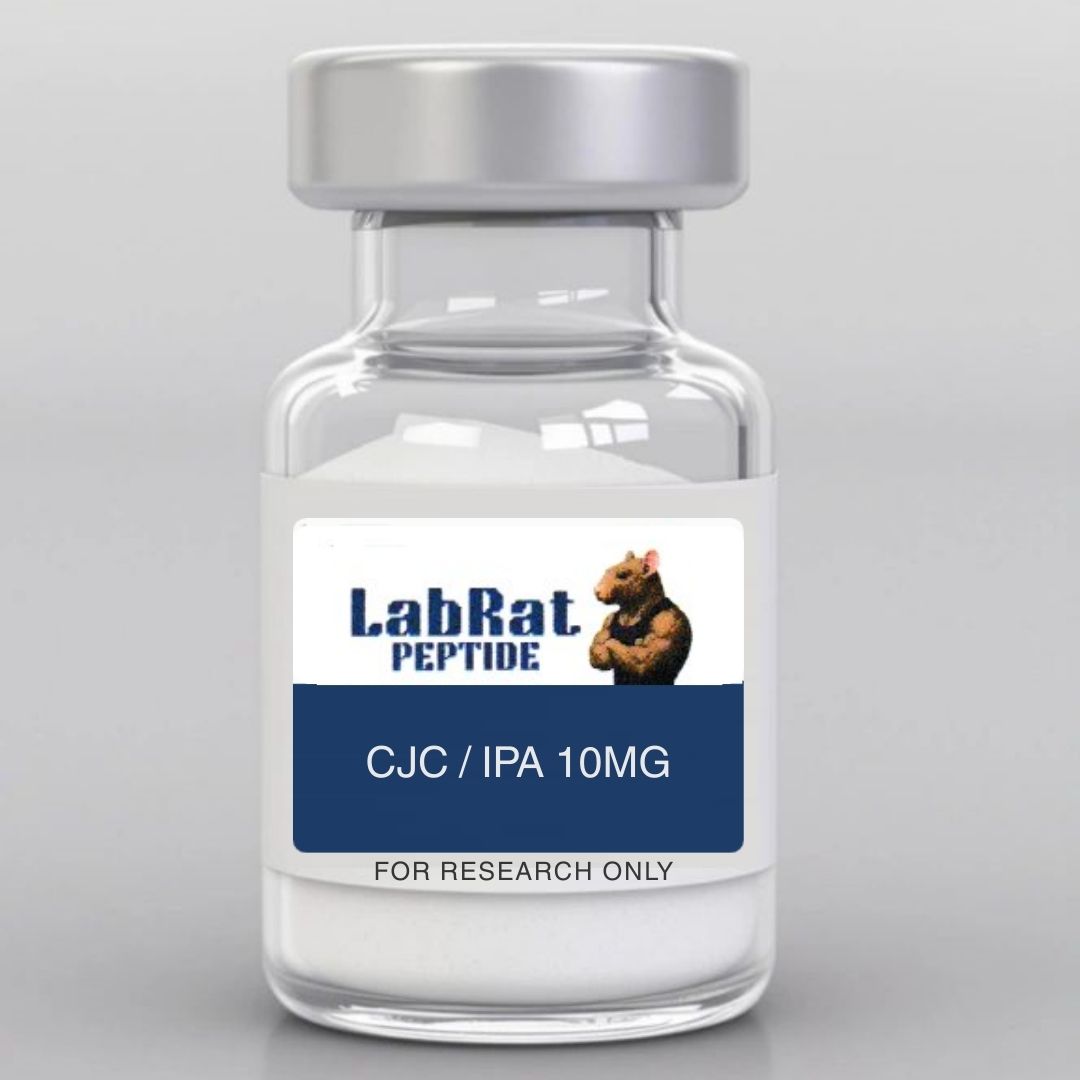
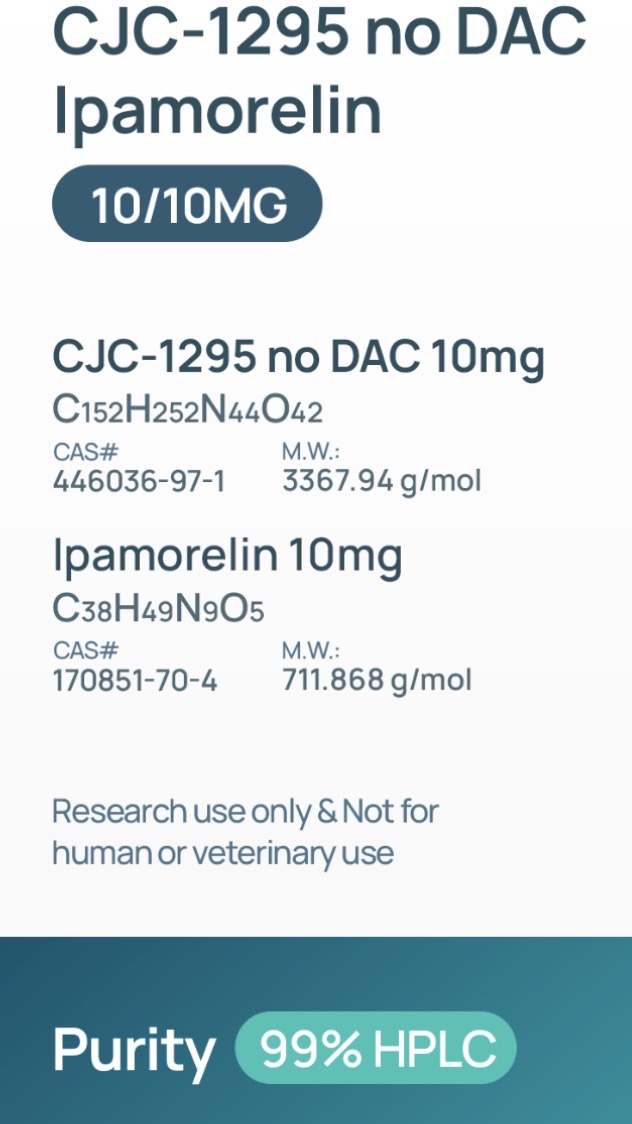
CJC-1295 / Ipamorelin Blend 10Mg
Synergistic peptide formulation studied for its combined stimulation of the GH axis and pituitary receptor pathways in preclinical research.
Summary
The CJC-1295 / Ipamorelin Blend is a research-use combination of two synthetic peptides designed to study coordinated stimulation of growth hormone pathways. CJC-1295 (no DAC) is a modified GHRH analog that interacts with receptors in the pituitary gland, activating signaling pathways that increase cyclic AMP and promote growth hormone release. Ipamorelin is a selective ghrelin receptor (GHS-R1a) agonist that triggers calcium-dependent signaling, further enhancing the growth hormone response initiated by CJC-1295.
In laboratory studies, this combination is frequently used to examine how the hypothalamus and pituitary work together to regulate growth hormone pulsatility. Research indicates that when the two peptides are administered together, they can produce a stronger and more sustained GH release pattern than either peptide alone. This allows researchers to analyze somatotropic feedback loops, receptor sensitivity, and pulsatile hormone dynamics.
Additional preclinical studies have explored the blend’s effects on cellular energy metabolism, GH binding protein production, and neuroendocrine timing signals. Because each peptide activates a different receptor pathway, using them in combination provides a controlled model for studying cross-communication between GHRH and ghrelin signaling systems.